

Meeting #33 Shark Evolution & Climate Change on Shark Physiology
During this meeting, we had an intriguing presentation about shark evolution by @joelgayford. He shared the importance of researching evolution on body size and morphology of sharks and their significance in extinction vulnerability.
We then had a promising presentation by @aaronhasenei1192 on his research on the ecophysiological responses of epaulette sharks under different climate change warming scenarios.
The Evolutionary History of Modern Sharks
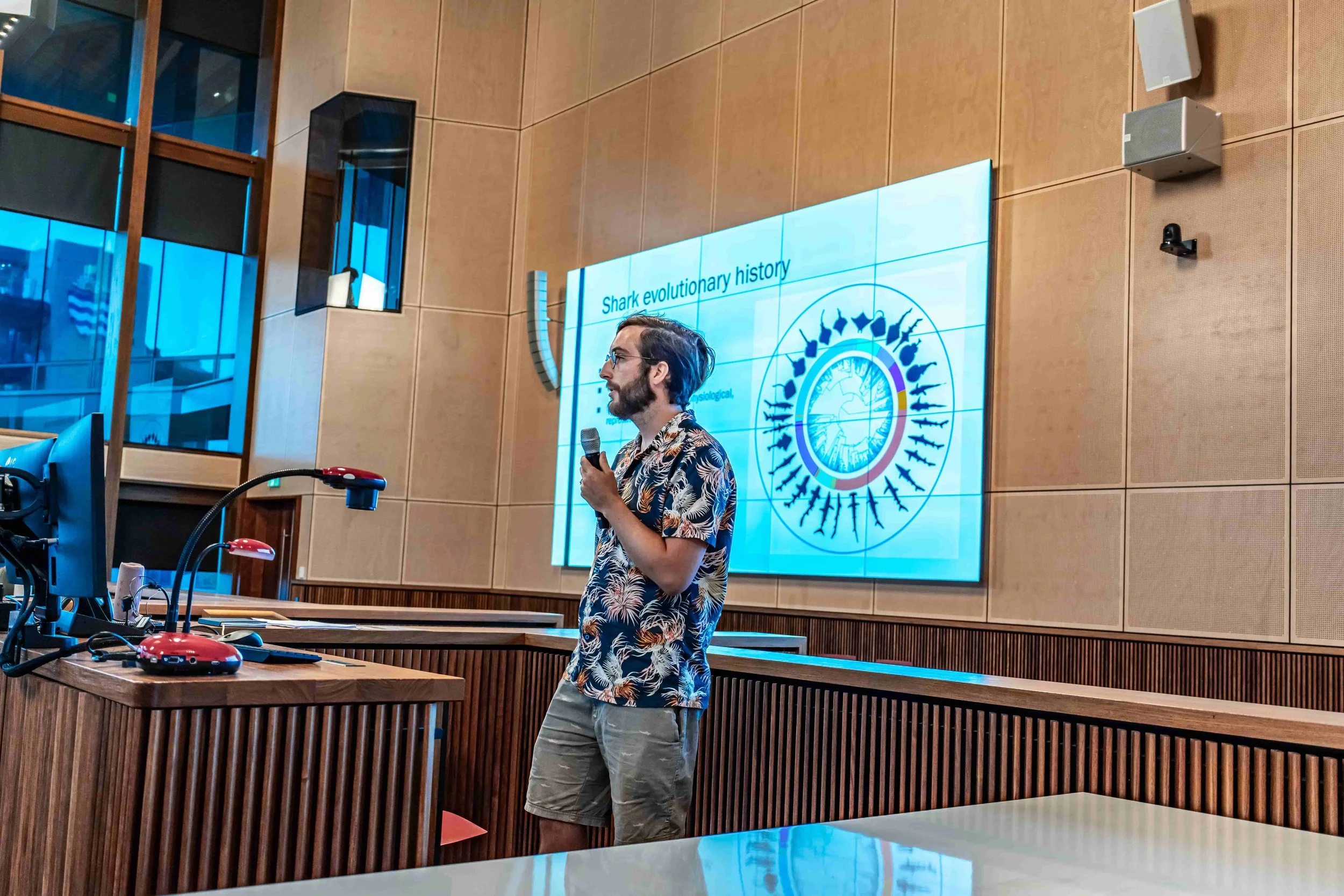
Gained insights into the wild distribution of sharks that have evolved in their 400+ million-year history.
Learnt about how Megalodons were likely akin in morphology to the sand tiger shark rather than the great white shark due to hydrodynamic advantages.
A glimpse into the ways phylogenetic independence shapes our understanding of extinction vulnerability
Ecophysiological Responses to Climate Change in Epaulette Sharks
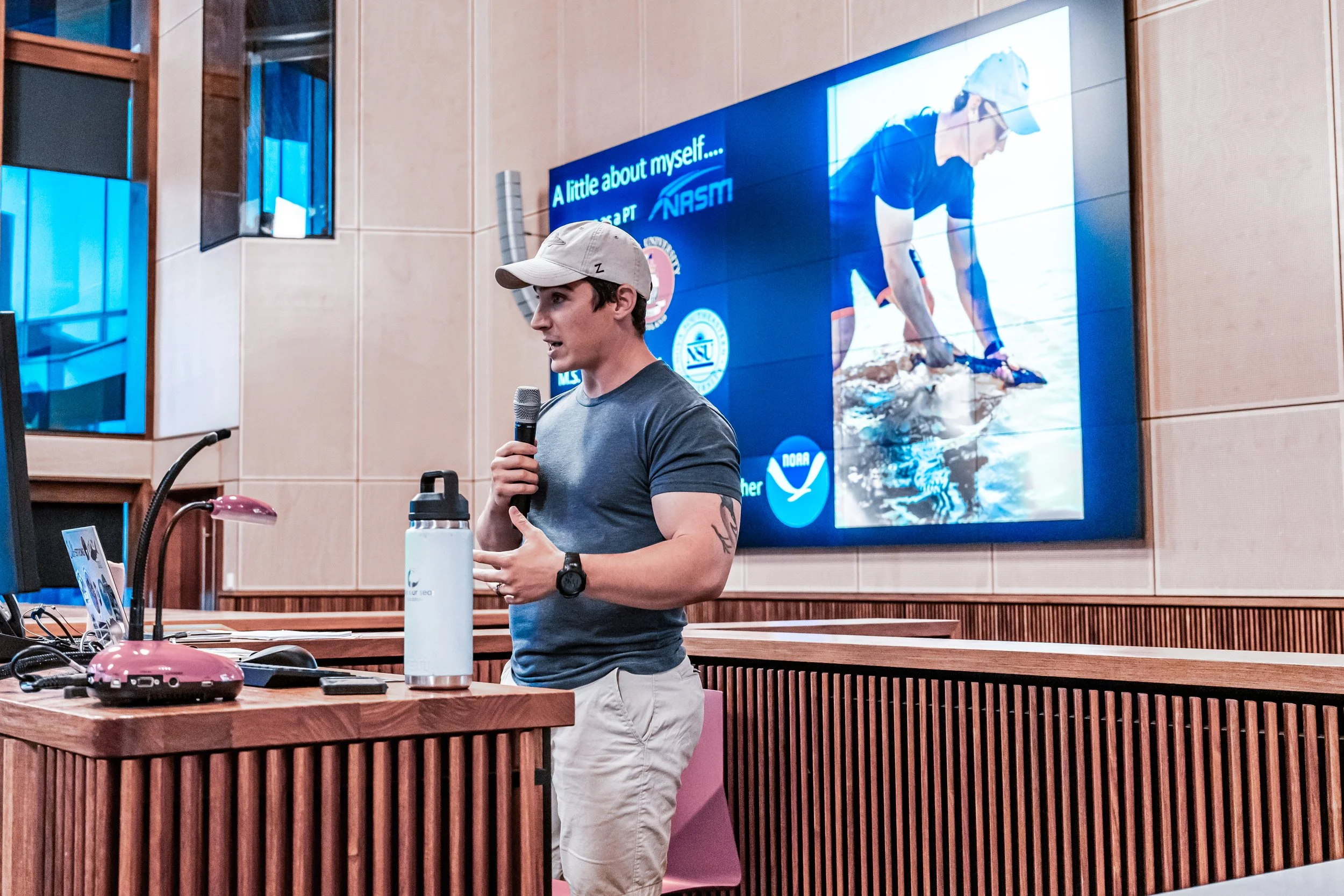
Learnt about the role of epaulette sharks as model species in which to examine phenotypic plasticity in elasmobranchs under different climate change scenarios, and how intra-specific variation can occur
Got to hear about the multiple methodologies—including genomics, haemotology, and respirometry—that are used to test sharks’ thermal tolerance and metabolic activity
Thank you Joel Gayford and Aaron Hasenei for giving these informative yet spectacular. presentation on their research, adding depth to these topics, and bringing their expertise to the discussion.